AI SEO Audits: How Automated Insights Can Supercharge Your Strategy
What exactly is an AI‑augmented SEO audit?
Definition in plain terms
An AI‑augmented SEO audit blends automated crawlers, machine‑learned models, and rule logic with human oversight. It ingests logs, sitemaps, analytics, and SERP data, then scores patterns across templates and page types instead of chasing random one‑offs.
Compared with manual checklists, it’s faster, more consistent, and brutally clear on priority. You get a ranked backlog linked to pages and business impact, not a spreadsheet of nits. No guesswork. Less bias.
Why it matters
AI spots systemic signals at scale—thin content clusters, orphaned hubs, intent mismatches, and internal link gaps—then maps them to searcher intent and revenue paths. The result: fewer tasks, bigger wins, shipped sooner.
Automated SEO audits vs. manual checklists: what wins and why
Checklists were built for small sites. At scale, they hide the patterns that actually tank performance and waste engineering time.
- Spot systemic failures: AI groups issues by template or component—headers, nav, product cards—so one fix lifts hundreds of URLs.
- Monitor continuously: automated audits run on schedules, catch regressions early, and alert before rankings or Core Web Vitals dip.
- Make it explainable: recommendations cite affected pages, severity, expected impact, and effort—built for stakeholder conversations.
- Tie to outcomes: connect fixes to traffic, non‑brand clicks, conversions, and revenue proxies—not vanity metrics.
Faster detection, faster ROI
When a pricing template slips from good LCP to needs improvement, you don’t wait for a quarterly audit. The alert triggers a small sprint, not a fire drill. Teams sleep better too.
What to include in AI SEO audits: the core components that matter
A durable framework spans technical, performance, content, and SERP intelligence. An automated audit should cluster fixes by template so engineering can batch work efficiently.
Technical foundations
- Crawlability and indexation: robots, canonicals, status codes, XML sitemaps, hreflang, pagination, and crawl‑waste in logs.
- Internal linking strategy: hub‑spoke paths, orphaned pages, nav depth, and anchor text that reinforces entities.
Performance diagnostics
- Core Web Vitals: LCP ≤ 2.5s, CLS ≤ 0.1, INP ≤ 200ms from CrUX and field data.
- Template‑level fixes: image preloading, critical CSS, server hints, and third‑party script governance.
Content and intent coverage
- Search intent mapping: align queries to page types (docs, pricing, features) to avoid intent collisions.
- Topical coverage and freshness: pillar gaps, near‑duplicates, consolidations, and updates that regain equity.
SERP features and competitors
- Feature opportunities: People Also Ask, snippets, reviews, and video eligibility by page type.
- Competitor benchmarking: who owns features, link velocity, and on‑page patterns you can emulate.
From findings to fixes: how Sage SEO operationalizes AI SEO audits
Insights only matter when they ship. Sage SEO was built to compress time from detection to deployment. Its AI audit features continually crawl, score, and rank what to fix next.
Prioritize by impact, not noise
- Automated crawl + scoring: combine URL value, template reuse, and severity to expose fixes with the highest business impact.
- AI clustering: group similar issues so engineering ships batch remediations instead of one‑off tickets.
- Action cards: step‑by‑step guidance for Core Web Vitals fixes, internal link opportunities, and content briefs.
- Outcome dashboards: tie recommendations to traffic, rankings, non‑brand clicks, and revenue proxies in a single view.
Built for explainability and scale
Every recommendation cites affected URLs, templates, estimated effort, and expected lift. You can export a sprint‑ready backlog or push tickets into your project tool. Nothing is a black box—the rationale is visible, and thresholds follow Google’s Page Experience guidance.
Real‑world use cases: AI SEO agencies and SaaS sites
Here’s how AI turns audits into outcomes in the wild.
AI SEO agency workflow that scales
Intake the domain and goals, run the automated audit, and generate a client‑ready report that explains issues by template and business impact. Build a 2‑week sprint plan with batchable fixes and a 90‑day roadmap fed by continuous monitoring. Deliverables include issue clusters, prioritized actions, and a narrative your client can share with leadership.
SaaS site example: pricing and docs templates
Audit shows LCP and INP risks on pricing and docs. Engineering preloads hero images, trims render‑blocking CSS, and defers analytics on specific components. Content maps queries by funnel stage; docs add task‑oriented H2s and internal links to features and signup. Rollouts ship by template, reducing regression risk.
Before/after metrics worth tracking
Time‑to‑fix drops from weeks to days; LCP improves by ~35%, CLS stabilizes below 0.1, and non‑brand clicks rise double digits in Search Console.
Prioritization and measurement that win stakeholder trust
Audits are politics unless prioritized. Make trade‑offs explicit and measurable. Then measure what changed.
- ICE/RICE scoring powered by volume‑of‑impact (affected URLs, sessions, conversions) and effort (dev hours, dependencies).
- Batch by template: fix the header, nav, or card component once to lift many pages—20% of tasks, 80% of wins.
- Reporting cadence: weekly progress on shipped work, monthly outcome deltas, and quarterly strategy resets with re‑forecasted potential.
Make ROI visible
Dashboards connect recommendations to rankings, Core Web Vitals, and conversion proxies, so updates don’t disappear into release notes. Show the delta per sprint—URLs improved, CLS reduced, queries gained—and the forecast for the next sprint. Stakeholders fund what they understand.
AI SEO audit checklist to get started
Stand up a repeatable workflow in days, not months. Keep it lightweight and visible.
- Run an automated crawl and baseline CWV; tag key page types (pricing, docs, features) and business priority.
- Cluster issues and create a 30/60/90‑day roadmap—quick wins first, batchable fixes next, strategic projects after.
- Ship fixes in batches; monitor deltas in rankings, CWV, and conversions via dashboards.
- Iterate with continuous automated audits in Sage SEO; track regressions and expand coverage.
- Close the loop with stakeholders: share changes, note trade‑offs, and refresh the prioritized backlog accordingly.
Make audits smaller—and outcomes bigger
That’s the point of AI in SEO.
Share this

Related Posts
-
AI-First SEO: The Future of Search Engine Optimization
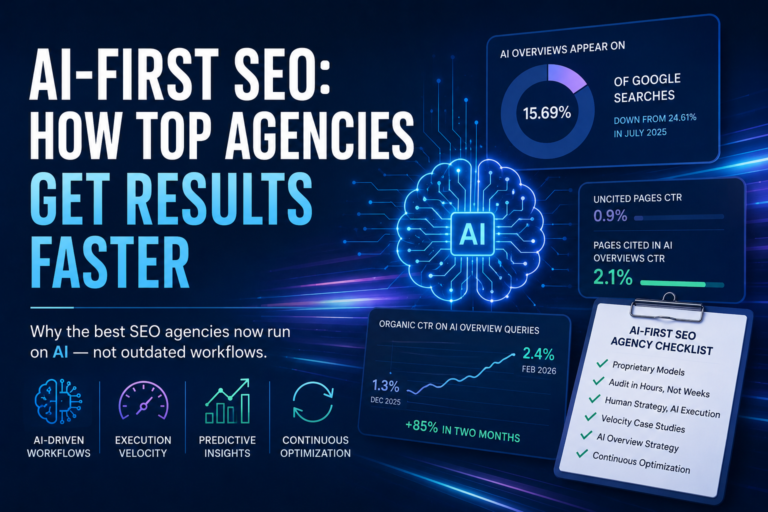
In November 2025, AI Overviews appeared on 15.69% of Google searches — down from a…
-
ContentOps: Streamlining Your SEO Workflow from Ideation to Publication
ContentOps: Streamlining Your SEO Workflow from Ideation to Publication Imagine a marketing team drowning in…
-
AI Content Writing Services: What Marketers Need to Know in 2024
AI content writing services promise speed, but winners in 2024 don’t outsource thinking to a…