
SEO Sage: Your Guide to AI-Driven Content Marketing
Imagine generating a fully optimized blog outline in seconds—complete with target keywords, meta descriptions, and suggested internal links—then refining tone and structure automatically. What once took teams weeks can now happen in minutes.
Artificial intelligence is no longer a distant concept reserved for sci-fi scenarios. It’s wired into the tools we use daily, fueling ai-driven content marketing strategies that push engagement and conversion rates to new heights. Yet many marketers still wrestle with time-consuming research and inconsistent content quality.
Welcome to SEO Sage, your guide to harnessing ai content marketing tools and techniques. We’ll break down every stage of the content lifecycle—from automated keyword research to performance analysis—so you can streamline workflows and demonstrate measurable ROI. Think of this as your playbook for becoming an authority in the AI-powered marketing era.
According to recent industry reports, companies leveraging artificial intelligence in marketing achieve up to 40% faster content production and a 25% boost in search rankings improvement.
Decoding AI’s Role in Modern Content Strategies
At its core, artificial intelligence in marketing comprises three pillars: machine learning, natural language processing (NLP), and generative AI. Machine learning algorithms detect patterns in user behavior, helping predict engagement trends. NLP engines parse and produce human-like text, powering chatbots and content suggestions. Generative AI models, like GPT, craft entire paragraphs or headlines on demand, mimicking tone and style.
Despite the hype, many marketers worry that AI will steal their jobs or produce generic, soulless copy.
In reality, AI excels at data-driven tasks—researching keywords, suggesting structures, even drafting baseline text—but thrives only with human guidance. When content strategists apply brand guidelines and creative insights, AI becomes a force multiplier. The myth of an ‘error-free’ AI writer ignores the need for ethical oversight and meticulous editing. Embracing AI doesn’t diminish creativity; it amplifies it by automating drudgery.
Integrating AI-driven content marketing tools unlocks efficiency and personalization at scale. For instance, automated keyword clustering can unearth niche long-tail terms that might escape manual research, while AI analytics track real-time performance shifts in search rankings improvement. Personalization engines tailor headlines and CTAs per audience segment, boosting click-through rates. Combined, these capabilities form a content optimization strategy that’s both agile and data-informed.
How to Construct an AI-Driven Content Workflow
Building an AI-driven workflow transforms content production into a streamlined assembly line. By automating repetitive tasks and injecting data-driven insights at every stage, you free creative teams to focus on strategy and storytelling.
Key Steps in an AI-Powered Content Workflow
- Use AI tools like Ahrefs and SEMrush to crawl search data and group related terms by intent. These platforms often surface trending topics, semantic keywords, and long-tail phrases, speeding up what once was hours of manual analysis.
- Leverage generative AI—such as ChatGPT or Jasper—to draft structured outlines complete with suggested headings, meta descriptions, and internal link recommendations. Input your primary theme—seo sage—and let the model produce first-pass drafts that align with your brand voice and audience needs.
- Use AI-driven editors like Grammarly or specialized NLP platforms to refine clarity, tone, and structure, even applying custom brand style guides. Switch between formal, conversational, or brand-specific voices instantly, ensuring consistency across the buyer journey while saving hours on manual revisions.
- Integrate SEO plugins like Yoast or RankMath for real-time checks on keyword usage, image alt-text proposals, and accessibility compliance (like ARIA labels and WCAG 2.1 standards). This ensures each post is optimized for search engines and inclusive audiences alike.
Finally, schedule periodic reviews to incorporate performance insights back into your workflow. By feeding AI analytics into every stage, you establish a self-improving loop that continuously elevates content relevance and impact.
Centralize outputs and team feedback in a shared content calendar or project management platform to maintain alignment and visibility.
Enhancing Craft CMS with AI-Powered Content Optimization
Craft CMS offers a flexible foundation for custom websites, but pairing it with AI extends its power into content optimization. By installing plugins like SEOmatic or Smart Map, developers can automate SEO tasks and streamline publishing workflows. These add-ons use generative AI to analyze your content structure and suggest improvements before you hit publish.
Automated metadata generation cuts down on manual tagging. AI scans each entry, crafting meta titles, descriptions, and even schema markup based on your content’s core topics. Simultaneously, image recognition models tag visuals with descriptive alt text and keywords, enhancing both accessibility and search visibility.
Imagine drafting a product roundup in minutes: input your key features, select tone presets in Craft’s AI plugin, and export a ready-to-edit post with optimized headings and image metadata. Or build a weekly blog series by feeding topic seeds into an AI script generator, then refine in Craft’s editor. This rapid cycle helps teams publish fresh, high-quality content on schedule.
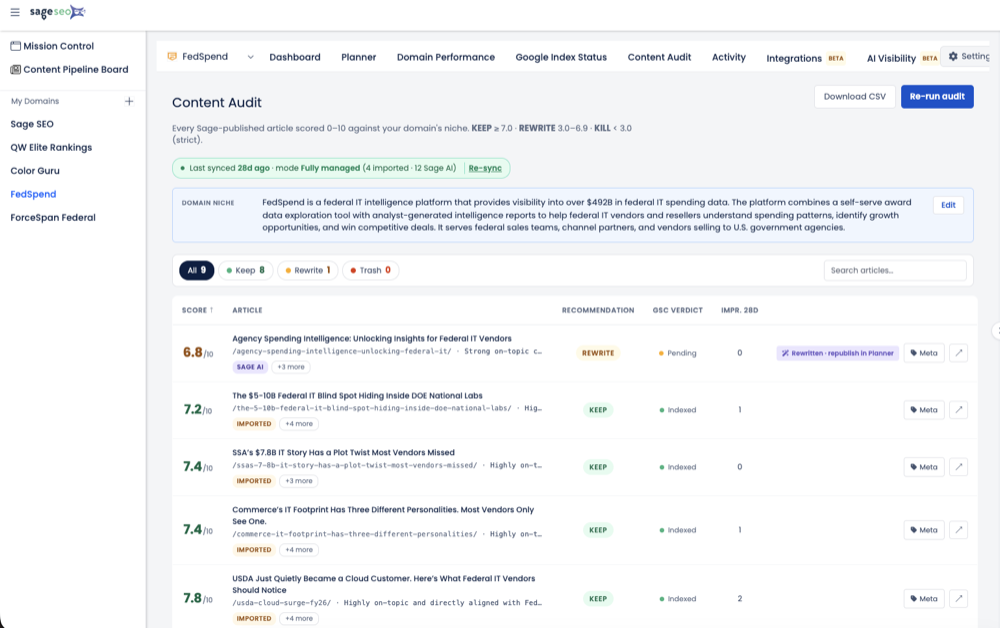
Skip the spreadsheets. Start Sage SEO free.
See how AI content ops transform your agency workflow in minutes.
Pair these capabilities with analytics plugins to monitor performance directly in Craft. Track engagement, scroll depth, and search rankings improvement without leaving the CMS. That seamless feedback informs your next round of AI-powered adjustments, making ai content optimization craft cms a cyclic and data-led process.
Tracking Performance and Iterating with AI
Effective seo analytics hinge on a focused set of metrics. Track user engagement—click-through rates, time on page, and scroll depth—alongside search rankings and conversion rates. These indicators reveal how your ai-driven content marketing efforts resonate with audiences and impact the bottom line.
Advanced AI analytics platforms dive deeper, running sentiment analysis on comments, predicting churn risk, and clustering content by performance patterns. Some tools even forecast keyword seasonality, empowering you to calendar topics for peak search interest.
The true power lies in iteration. Feed these insights back into your AI-driven workflow—adjust keyword sets, refine tone, or test new formats. Over time, this feedback loop fuels continuous improvement, turning data into strategic advantage.
Combine AI insights with A/B and multivariate testing to validate creative hypotheses. For example, use AI-suggested headline variations in split tests or test personalized content blocks. This fusion of automation and experimentation speeds up decision-making and ensures your content evolves in step with audience preferences.
Anticipating AI’s Next Frontiers in Content Marketing
The next wave of ai-driven content marketing shifts toward multimodal creation. Voice assistants will draft conversational blogs, while AI video generators turn scripts into engaging clips with minimal human input. Hyper-personalization engines will tailor entire content journeys in real time, guiding prospects along nuanced paths. These innovations promise richer experiences but require vigilant oversight to preserve authenticity and avoid AI bias.
Ethical considerations become central as AI writes closer to the human edge. Establish transparent guidelines for data sourcing, avoid perpetuating stereotypes, and maintain a unified brand voice across all automated outputs. Regular bias audits and human-in-the-loop reviews ensure your AI tools act as companions—not replacements—in the creative process.
Stay ahead by piloting new AI content creation tools and fostering cross-functional teams. Integrate marketing, legal, and IT in strategy sessions to navigate privacy laws and emerging regulations. This holistic approach secures both innovation and compliance as AI redefines the content marketing landscape.
Charting Your Path as the Next SEO Sage
Becoming an SEO Sage means blending human insight with AI’s speed.
Start by evaluating your content lifecycle and selecting AI tools that map to each stage—from automated research to accessibility checks. Structure your team’s workflow around clear feedback loops, using analytics to refine topics and tone.
In Craft CMS, deploy plugins that auto-generate metadata and image tags to accelerate publishing.
Finally, prioritize ethical guardrails and cross-team collaboration so your AI-driven strategy evolves responsibly and keeps delivering measurable impact.
Embrace continuous learning—regularly audit AI outputs and update your best practices to stay ahead in the rapidly evolving content automation landscape.