
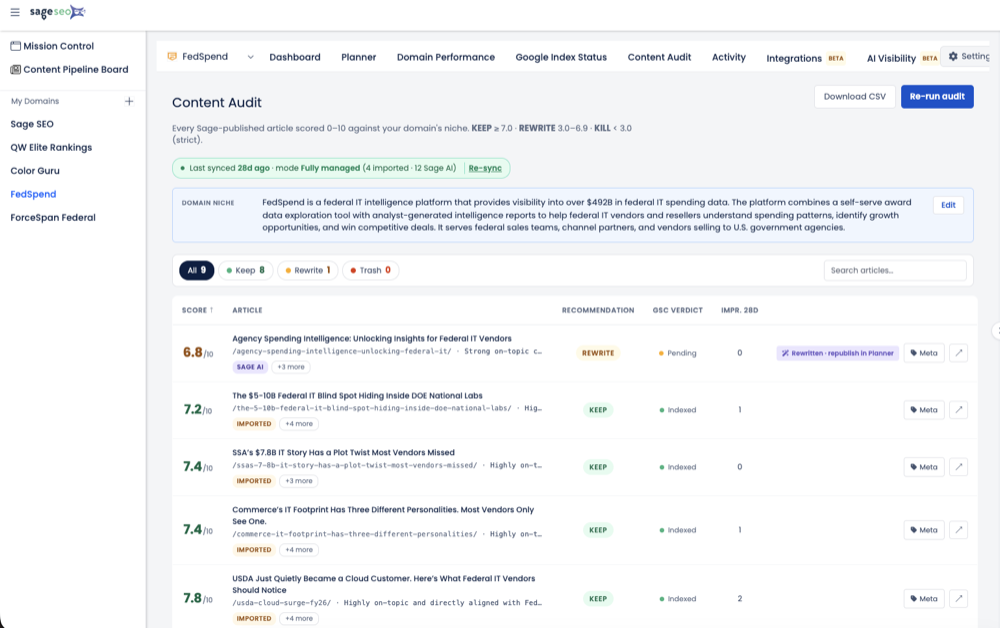
The Power of AI-Driven Content Recommendations
What if you could predict which topics will drive 3× more engagement before writing a single word? For many content marketers, the idea sounds like science fiction. Yet modern AI-driven tools analyze user behavior, search intent, and competitor gaps in real time to surface the most promising subjects. This isn’t just automation—it’s a bold reimagining of the content recommendations process from ideation to execution.
In an era where every blog post is a bet, AI-powered insights can transform uncertain guesses into data-backed bets that pay off. Let’s explore how you can build, deploy, and scale an AI-driven content strategy that consistently outperforms traditional research.
Why Manual Topic Research Fails to Deliver High-Impact Ideas
For decades, marketers have leaned on spreadsheets, keyword lists, and intuition to decide what to write next. That manual approach creates a patchwork of siloed data sources: search volume tools here, social listening over there, competitor audits tossed into another tab.
This fragmented content planning workflow often misses unseen opportunities. Without real-time trend detection or cohesive data, you risk publishing low-impact topics that generate little traffic or engagement.
The Limits of Spreadsheet-Driven Research
Without a unified view, spotting content gaps or emerging questions is like searching for a needle in a haystack. Manual processes can’t adapt quickly to shifting search patterns or sudden spikes in demand, leaving your team scrambling to catch up.
By contrast, AI uses content ideation tools to reveal untapped niches and forecast engagement before you hit publish.
The stakes are high. Wasted effort on irrelevant ideas means fewer leads, declining retention, and an uphill battle to justify ROI. Even seasoned teams struggle to validate the relevance of each concept, leading to guesswork rather than strategic decision-making.
In short, traditional topic research falls short because it’s slow, disconnected, and blind to nuanced user signals. Enter AI-driven content strategy, which unifies data streams—search behavior, social chatter, content performance metrics—into a single recommendation engine that scales ideation from hours to seconds.
Decoding User Intent: How AI Leverages Behavioral Data for Content Recommendations
Understanding what your audience truly wants is the cornerstone of any winning content strategy. Traditional methods rely on manual analysis of search queries, but they can’t grasp the nuances of human language. Natural language processing (NLP) changes the game by parsing context, sentiment, and entity relationships within user queries.
AI goes beyond mere keyword frequency. It analyzes behavioral signals—click-through rates, dwell time, bounce rates—to gauge relevance and satisfaction. These behavioral data insights feed into sophisticated algorithms that predict which topics will resonate most.
How Does AI Recommend Content Topics?
By combining user intent analysis with content performance metrics, AI-driven platforms build predictive models that score and rank topic ideas. Each suggestion carries a forecasted engagement score based on past user patterns and SERP features like featured snippets or related questions.
For instance, if your keyword tool shows “best email marketing tips” has medium volume but AI detects rising dwell time on similar articles, it will flag that topic as high potential. The system continuously recalibrates as fresh data flows in, ensuring recommendations stay relevant.
Moreover, NLP-driven clustering identifies semantically related subtopics—think “email segmentation” or “subject line optimization”—so content teams can craft comprehensive pillar-and-cluster structures. This topic clustering ensures every article ties back to a core theme, boosting topical authority and SEO value.
Behavioral signals weigh in on this clustering, filtering out over-saturated angles and spotlighting unique angles that competitors might overlook.
This fusion of NLP and behavioral analysis accelerates ideation, turning hours of keyword research into minutes. The result? A pipeline of targeted, high-impact topics primed for success.
Step-by-Step Guide to Your AI-Driven Content Recommendations Workflow
Integrating AI into your content planning workflow means feeding the right inputs, choosing tools that align with your goals, and embedding insights into every editorial touchpoint. Here’s how to build a reliable, repeatable process:
This AI-enabled approach transforms content ideation from gut-driven to data-driven, making every topic selection measurable and scalable.
1. Gather Essential Data Inputs
- Keyword lists: Combine seed terms with long-tail variants to cover high-value themes and niche queries.
- Competitor content: Analyze top-ranking posts for structure and performance to spot gaps.
- Site analytics: Identify your top-performing pages, user paths, and bounce-rate patterns.
Feeding these diverse streams into AI models allows them to detect content gaps and trending topics with precision.
2. Select and Configure AI Content Tools
Not all platforms are equal. Prioritize tools with advanced topic clustering features, real-time trend dashboards, and robust integrations with your CMS or project management software. An intuitive interface and customizable filters for industry or format ensure rapid adoption by your team.
Use built-in AI-driven content writing features to generate outlines, suggest headings, and optimize on-page SEO elements in real time. This level of ai content optimization reduces back-and-forth between writers and editors, speeding up publication.
3. Embed AI Insights into Editorial Processes
- Populate your content calendar with AI-ranked topic ideas, ordered by forecasted engagement scores.
- Review top suggestions during editorial meetings and align them with campaign priorities or seasonal events.
- Assign writers clear briefs—generated by AI—that include target keywords and suggested subtopics.
Automate reminders and status updates in your project management tool to keep tasks on track.
Skip the spreadsheets. Start Sage SEO free.
See how AI content ops transform your agency workflow in minutes.
4. Monitor, Learn, and Iterate
Consistent monitoring not only validates the quality of your recommendations but also uncovers emerging user questions that can feed back into your next ideation cycle.
After publishing, track content performance metrics—page views, time on page, scroll depth, and conversions—and feed this data back into the AI system. These continuous feedback loops help the algorithm adapt to evolving user intent, sharpening future recommendations and maintaining your competitive edge.
Real Results: A 3× Traffic Surge in 60 Days with AI Content Recommendations
When a mid-size e-commerce client partnered with SageSEOs, their blog was a ticking time bomb. Traffic had plateaued at 10,000 monthly sessions, bounce rates hovered above 70%, and user engagement metrics offered no clear direction for new topics.
Beyond the metrics, the client reported increased social shares and high-quality backlinks, signaling stronger industry relevance.
Client Background and Challenges
Competing against industry giants, the client faced:
- Low organic visibility for high-intent product and buyer-journey keywords.
- Poor time-on-page (under 1 minute) and high exit rates on cornerstone content.
- A labor-intensive ideation process that produced generic topics with little strategic focus.
- Difficulty validating topic relevance without reliable forecasting tools.
Implementation and AI Tool Configuration
To overhaul their strategy, we deployed the AI Content Suite and integrated:
- Keyword inputs: 500 seed terms and long-tail variations specific to their niche.
- Competitor URLs: Top 20 performing pages for each core theme.
- Site analytics: 12 months of historical data, including user flows and conversion rates.
Key configurations included:
- Creating topic clusters around 10 pillar pages to establish topical authority.
- Enabling trend detection alerts for emerging questions in real time.
- Calibrating forecasting models to weight dwell time and scroll depth for engagement scoring.
Within two weeks, the editorial calendar was transformed with over 60 prioritized topics, each accompanied by AI-generated briefs covering target keywords, audience segments, and content gaps.
Outcomes and Key Takeaways
After launching the AI-driven recommendations:
- Organic traffic tripled—from 10,000 to over 30,000 monthly sessions within 60 days.
- Average time on page increased by 25%, reaching nearly 2 minutes per visit.
- Newsletter sign-ups climbed 15%, driven by CTAs embedded in high-intent articles.
- Content production velocity improved by 40%, thanks to streamlined ideation and briefing.
Crucially, human editors reviewed AI briefs to preserve brand voice and ensured data freshness by feeding real-time performance metrics back into the system, optimizing each subsequent recommendation.
Top AI Content Strategy Best Practices and Pitfalls to Avoid
Embracing AI for content recommendations accelerates ideation, but it’s not a silver bullet. Involve cross-functional teams—SEO specialists, editors, and data analysts—to interpret AI insights holistically. Then follow these best practices to maximize impact:
- Ensure data accuracy: Regularly refresh inputs—keyword lists, analytics, and competitor data—to prevent stale recommendations.
- Maintain editorial voice: Use AI outputs as a starting point; human editors should refine tone, style, and brand consistency.
- Balance automation with oversight: Schedule periodic reviews of AI-suggested topics to verify alignment with broader marketing goals.
- Monitor feedback loops: Feed post-publication performance metrics back into the AI system to enhance future forecasts.
Avoid these common pitfalls:
- Over-reliance on algorithms: Blindly trusting AI can lead to homogenous content and missed brand nuances.
- Neglecting context: Data can’t capture every brand story or regulatory constraint—apply human judgment where needed.
- Ignoring diversification: Don’t chase only high-volume topics; include niche angles to cultivate long-term authority.
Balancing AI-driven efficiency with the nuanced creativity of your editorial team is crucial. Use AI to uncover patterns at scale, but let your writers inject storytelling flair, brand anecdotes, and expert opinions that differentiate your content. This hybrid approach ensures each post is both data-informed and deeply human.
Regular training and workshops help your team stay proficient with evolving AI features, turning potential pitfalls into competitive advantages.
Emerging Trends Shaping AI-Driven Content Strategy
The AI landscape is evolving rapidly. Staying ahead means embracing the next wave of innovations in ai-driven content strategy:
Generative AI for Dynamic Personalization
Next-gen models like GPT-4 and beyond are capable of crafting personalized content variations at scale. Imagine product guides that adjust tone, examples, and calls-to-action based on a reader’s industry, purchase history, or engagement profile in real time. Early adopters report up to 60% higher conversion rates when deploying AI-personalized articles.
Automated A/B Testing of Headlines and Meta Descriptions
Instead of relying on retrospective analysis, AI engines can generate dozens of headline and meta-description variants. Using predictive click-through models and SERP feature simulations, these systems automatically identify and deploy the highest-performing options. This approach slashes testing time from weeks to hours, driving incremental traffic gains of 10–15%.
Cross-Channel Content Recommendations
AI systems are no longer confined to blogs. Integrated with customer data platforms (CDPs), they can push related blog posts in email workflows, suggest video clips on social media feeds, and serve in-app tutorials or help articles—driven by unified user profiles and past engagement metrics.
As these trends converge, content planning and execution will merge into a seamless continuum. Brands that embrace real-time personalization, automated experimentation, and cross-channel orchestration will deliver consistently relevant experiences, leaving static workflows in the dust.
These innovations signal that the future of content recommendations is adaptive, responsive, and unequivocally data-first.