
Embracing AI for Faster, Smarter Technical SEO Audits
Traditional technical SEO audits often feel like navigating a maze blindfolded: massive spreadsheets, endless crawl reports and manual checks that barely keep pace. Digital marketers wrestle with crawl limits, false positives and outdated rule-based systems that bury critical issues under noise.
Enter ai for technical seo audits—a game changer. By harnessing machine learning and natural language processing, AI-driven tools scan, prioritize and flag errors in moments. Imagine auto-prioritized crawl errors based on traffic impact, with predictive scoring that tells you exactly which fixes will drive growth. Speed, precision and scalability at your fingertips.
No more guesswork—just data-driven recommendations you can trust.
Why Automating Technical SEO Audits Matters
The sheer scale and complexity of modern websites have outpaced manual audit methods. As digital estates grow, crawling thousands of pages across subdomains, scripts and media assets drains time and resources. SEO teams hit crawl limits, developers chase false positives and critical issues slip through outdated checklists.
ai technical seo audits liberate teams from these bottlenecks. Machine learning models sift through log files and Google Search Console data, learning historical patterns to filter noise. Instead of wading through every alert, you get a prioritized list of real problems with contextual insights.
False positives drop dramatically because anomaly detection algorithms recognize genuine crawl errors and performance spikes. Meanwhile, AI-powered tools automatically update validation rules, adapting to evolving web standards. The result? Continuous technical SEO automation that accelerates optimization and frees human experts for strategic work.
In an automated technical SEO audit environment, teams notably reclaim hours each week once spent on repetitive checks. They also benefit significantly from real-time predictive SEO analysis, forecasting which site issues could harm rankings before they escalate.
Key AI Features Powering Technical SEO Audits
AI for seo audit relies on advanced algorithms that understand website data at scale. Instead of static rule lists, machine learning adapts to unique site contexts, exposing hidden issues faster.
NLP for Content Structure Analysis
Natural Language Processing algorithms parse page content to evaluate heading hierarchies, internal linking context and meta tag relevance. By analyzing linguistic patterns, NLP models detect thin content and structural inconsistencies that traditional crawlers often miss.
Anomaly Detection for Crawl and Performance Spikes
Machine learning-based anomaly detection scrutinizes log data and crawl reports in real time. Unexpected HTTP status codes, sudden drops in page speed or traffic irregularities trigger alerts—so you can address potential penalties before they escalate.
Automated Schema Markup Validation
AI-driven SEO tools parse HTML to verify schema.org implementations across pages. They compare detected markup against best practices, highlighting missing fields or incorrect types so developers can correct JSON-LD or microdata swiftly.
Predictive Impact Scoring
Predictive SEO analysis models assign a risk score to each technical issue based on historical data and ranking correlations. This approach quantifies the potential SEO cost of errors, guiding teams to focus on fixes that deliver the most traffic uplift.
Skip the spreadsheets. Start Sage SEO free.
See how AI content ops transform your agency workflow in minutes.
Together, these ai powered seo audits capabilities transform a routine crawl into a strategic roadmap, making website optimization with AI fast, reliable and future-proof.
How to Build an AI-Driven SEO Audit Workflow
Establishing an ai for seo audit workflow requires a structured approach. From ingesting raw logs to integrating with development pipelines, each stage must feed data back for continuous model refinement and more accurate insights over time.
Step 1: Ingest Data from Logs, GSC and Site Crawls
The foundation of automated technical SEO audit is data ingestion. Pull server logs, Google Search Console exports and full-site crawl reports into a unified repository. Ensure timestamps and URL structures align to enable cross-source analysis and historical data tracking.
Step 2: Train Models on Historical SEO Patterns
Next, feed your existing audit results into machine learning pipelines. Models learn page performance baselines, typical crawl error distributions and schema markup usage. Regular retraining with fresh data ensures the AI technical SEO audits engine adapts to site changes and emerging best practices.
Step 3: Generate Automated Reports and Prioritize
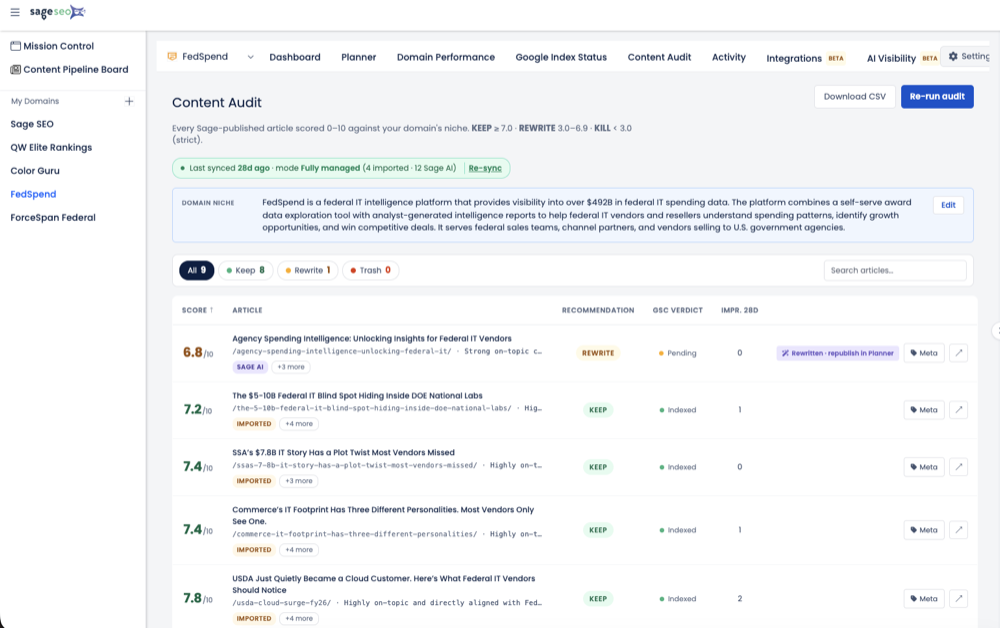
Once trained, automation generates audit reports complete with issue severity, predictive impact scores and contextual snippets. AI for SEO audit platforms can auto-create dashboards and send prioritized task lists to stakeholders, highlighting fixes that will yield the highest ROI.
Step 4: Integrate with Ticketing and Dev Workflows
Close the loop by syncing audit outputs with project management tools like Jira or Trello. Automated ticket creation ensures developers see precise error locations and remediation guidance. Bi-directional integrations let the AI powered SEO audits system track when issues are resolved and retrain models on new results.
Best Practices for Continuous Learning and Refinement
Schedule regular data refreshes and retraining cycles, especially after site migrations or major updates. Monitor model performance metrics—such as precision and recall—to catch drift. Document changes in audit criteria and feed back successful fixes to accelerate predictive SEO analysis over time.
AI Audit in Action: A Case Study
For one mid-sized agency, integrating ai for technical seo audits was transformative. Agency X typically spent 20 hours per audit cycle; after adopting Sage SEOs AI platform, audit time shrank by 70%, dropping to just six hours.
With anomaly detection and predictive impact scoring, teams applied 30% more critical fixes in the first sprint. The AI-driven prioritization led to a 15% faster crawl budget utilization, enabling deeper site coverage and earlier issue detection. Within two months, organic traffic climbed by 10%, demonstrating how automated technical SEO audit tools can directly drive growth.
Beyond numbers, Agency X reported higher team morale, as rote tasks were replaced by strategic problem-solving. And because the AI SEO audits solution continuously learns, the accuracy of its issue detection improved over successive cycles—reducing false positives by an estimated 25%.
These real-world results underscore the ROI potential of ai powered seo audits across diverse site architectures.
Stepping into the Future of Technical SEO Optimization
In summary, ai for technical seo audits empowers teams to move beyond manual bottlenecks, tapping NLP, anomaly detection and predictive scoring to unearth issues faster. Automated schema validation and continuous learning refine checks as your site evolves. By integrating audit outputs with development workflows, you streamline remediation and maximize crawl efficiency. Technical SEO specialists and developers gain back precious hours for strategy, not spreadsheets. Now is the moment to evaluate your current audit process—compare rule-based methods with AI-driven insights. Embracing this shift positions your SEO operations for scalable growth, transforming routine crawls into proactive optimization engines.